Cult of Sea

Maritime Knowledge base

  • Home
  • Knowledge base
    • Bridge Equipment
    • Cargo Work
    • Deck
    • General
    • Gmdss
    • Maritime Law
    • Marpol
    • MLC 2006
    • Meteorology
    • Navigation
    • Safety
    • Security
    • Ship Construction
    • Ship Handling
    • Ship Stability
    • Shippie’s Escape
    • Surveys
    • Tankers
  • Colreg’s (ROR)
    • Index (Colreg’s)
    • Part A- General
      • Rule 1 – Application
      • Rule 2 – Responsibility
      • Rule 3 – General Definitions
    • Part B- Steering and Sailing
      • Section 1 (Rule 4 -10)
        • Rule 4 – Application
        • Rule 5 – Lookout
        • Rule 6 – Safe Speed
        • Rule 7 – Risk of collision
        • Rule 8 – Action to avoid collision
        • Rule 9 – Narrow Channels
        • Rule 10 – Traffic separation schemes
      • Section 2 (Rule 11 – 18)
        • Rule 11 – Application
        • Rule 12 – Sailing vessels
        • Rule13 – Overtaking
        • Rule 14 – Head on situation
        • Rule 15 – Crossing situation
        • Rule 16 – Action by give-way vessel
        • Rule 17 – Action by stand-on vessel
        • Rule 18 – Responsibilities between vessels
      • Section 3 (Rule 19)
        • Rule 19 – Conduct of vessels in restricted visibility
    • Part C- Lights and Shapes
      • Rule 20 – Application
      • Rule 21- Definitions
      • Rule 22 – Visibility of lights
      • Rule 23 – Power-driven vessels underway
      • Rule 24 – Towing and pushing
      • Rule 25 – Sailing vessels underway and vessels under oars
      • Rule 26 – Fishing vessels
      • Rule 27 – Vessels N.U.C or R.A.M
      • Rule 28 – Vessels constrained by their draught
      • Rule 29 – Pilot vessels
      • Rule 30 – Anchored vessels and vessels aground
      • Rule 31 – Seaplanes
    • Part D- Sound and Light Signals
      • Rule 32 – Definitions
      • Rule 33 – Equipment for sound signals
      • Rule 34 – Manoeuvring and warning signals
      • Rule 35 – Sound signals in restricted visibility
      • Rule 36 : Signals to attract attention
      • Rule 37 – Distress signals
    • Part E- Exemptions (Rule 38)
      • Rule 38 – Exemptions
    • Part F – Verification of compliance with the provisions of the Convention
      • Rule 39 – Definitions
      • Rule 40 – Application
      • Rule 41 – Verification of compliance
    • Annexes
      • Annex 1 – Positioning and technical details of lights and shapes
      • ANNEX II – Additional Signals for Fishing Vessels Fishing in Close Proximity
      • ANNEX III – Technical Details of Sound Signal Appliances
      • ANNEX IV – Distress Signals
  • Glossary
  • Contact

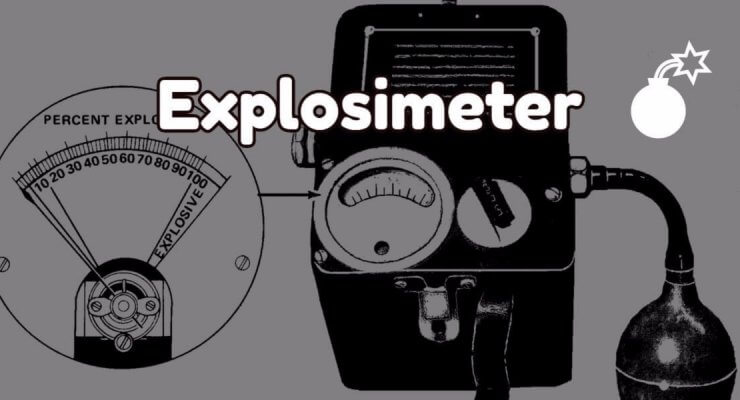
Combustible Gas Indicator or (Explosimeter) – Tanker Instruments

Principle The Combustible Gas Indicator (CGI) or Explosimeter is used to measure the volume of flammable gas in a gas/air mixture. It gives the result as a percentage of the lower flammable limit. It is used to ascertain the atmosphere in a cargo tank when planning tank cleaning in a too lean atmosphere or for evaluation of C/H gas prior to man entry, hot work or other operations.Marine Safety Appliances MSA 40 is a commonly used CCI. It works on the Catalytic Combustion Principle. A catalytic filament is heated by an electric current. A sample of the atmosphere to be tested is drawn over … [Read more...]

By Cult of Sea Filed Under: Tankers Tagged With: atmosphere, COMBUSTIBLE GAS INDICATOR, EXPLOSIMETER, gas, hc, instrument, tank cleaning, tankers

mariner-gps
Sail Time
Simple Colregs COS Ad

Join Our List

Subscribe to our mailing list and get interesting stuff and updates to your email inbox.

Powered with ♥ by Cult of Sea

instagram-button

What others are reading

Search Procedures & Stores Checks

Search Procedures & Stores Checks – ISPS (Merchant Ships)

Cargo Calculations – Tanker Work

What is VEF (Vessel Experience Factor) ?

Blu code

BLU Code – Code Of Practice For The Safe Loading And Unloading Of Bulk Carriers

Glossary of Terms – Petroleum Cargo Calculations

Unclos

UNCLOS – Salient Features, Objectives, Maritime Zones, Passages and Duties

Edible oil

Recommended Practices for Storage and Transport of Edible Oils and Fats

How NAVTEX Works

General Average York Antwerp Rules

What is General Average & the importance of York-Antwerp Rules ?

Marine Insurance

Marine Insurance – Purpose, Principle, Warranties and General Average

Doppler Log

Doppler Log – Principle, Working, Speed and Errors

Vegetable, Palm and Soybean/Sunflower Oils – Carriage on Tankers

Dragging Anchor

How do you make out if the Anchor is dragging?

Ballast Water Exchange

Ballast Water Management – Merchant Ships

Anti Exposure Suit


About Us | Terms | Contact Us | Sitemap | Marine Glossary (BETA)

Cult of Sea®™ · Made with ❤ by a small band of sailors