Cult of Sea

Maritime Knowledge base

  • Home
  • Knowledge base
    • Bridge Equipment
    • Cargo Work
    • Deck
    • General
    • Gmdss
    • Maritime Law
    • Marpol
    • MLC 2006
    • Meteorology
    • Navigation
    • Safety
    • Security
    • Ship Construction
    • Ship Handling
    • Ship Stability
    • Shippie’s Escape
    • Surveys
    • Tankers
  • Colreg’s (ROR)
    • Index (Colreg’s)
    • Part A- General
      • Rule 1 – Application
      • Rule 2 – Responsibility
      • Rule 3 – General Definitions
    • Part B- Steering and Sailing
      • Section 1 (Rule 4 -10)
        • Rule 4 – Application
        • Rule 5 – Lookout
        • Rule 6 – Safe Speed
        • Rule 7 – Risk of collision
        • Rule 8 – Action to avoid collision
        • Rule 9 – Narrow Channels
        • Rule 10 – Traffic separation schemes
      • Section 2 (Rule 11 – 18)
        • Rule 11 – Application
        • Rule 12 – Sailing vessels
        • Rule13 – Overtaking
        • Rule 14 – Head on situation
        • Rule 15 – Crossing situation
        • Rule 16 – Action by give-way vessel
        • Rule 17 – Action by stand-on vessel
        • Rule 18 – Responsibilities between vessels
      • Section 3 (Rule 19)
        • Rule 19 – Conduct of vessels in restricted visibility
    • Part C- Lights and Shapes
      • Rule 20 – Application
      • Rule 21- Definitions
      • Rule 22 – Visibility of lights
      • Rule 23 – Power-driven vessels underway
      • Rule 24 – Towing and pushing
      • Rule 25 – Sailing vessels underway and vessels under oars
      • Rule 26 – Fishing vessels
      • Rule 27 – Vessels N.U.C or R.A.M
      • Rule 28 – Vessels constrained by their draught
      • Rule 29 – Pilot vessels
      • Rule 30 – Anchored vessels and vessels aground
      • Rule 31 – Seaplanes
    • Part D- Sound and Light Signals
      • Rule 32 – Definitions
      • Rule 33 – Equipment for sound signals
      • Rule 34 – Manoeuvring and warning signals
      • Rule 35 – Sound signals in restricted visibility
      • Rule 36 : Signals to attract attention
      • Rule 37 – Distress signals
    • Part E- Exemptions (Rule 38)
      • Rule 38 – Exemptions
    • Part F – Verification of compliance with the provisions of the Convention
      • Rule 39 – Definitions
      • Rule 40 – Application
      • Rule 41 – Verification of compliance
    • Annexes
      • Annex 1 – Positioning and technical details of lights and shapes
      • ANNEX II – Additional Signals for Fishing Vessels Fishing in Close Proximity
      • ANNEX III – Technical Details of Sound Signal Appliances
      • ANNEX IV – Distress Signals
  • Glossary
  • Contact

OIL TANKER OPERATIONS (Loading) – Conventional Tanker Basics

Tanker Loading

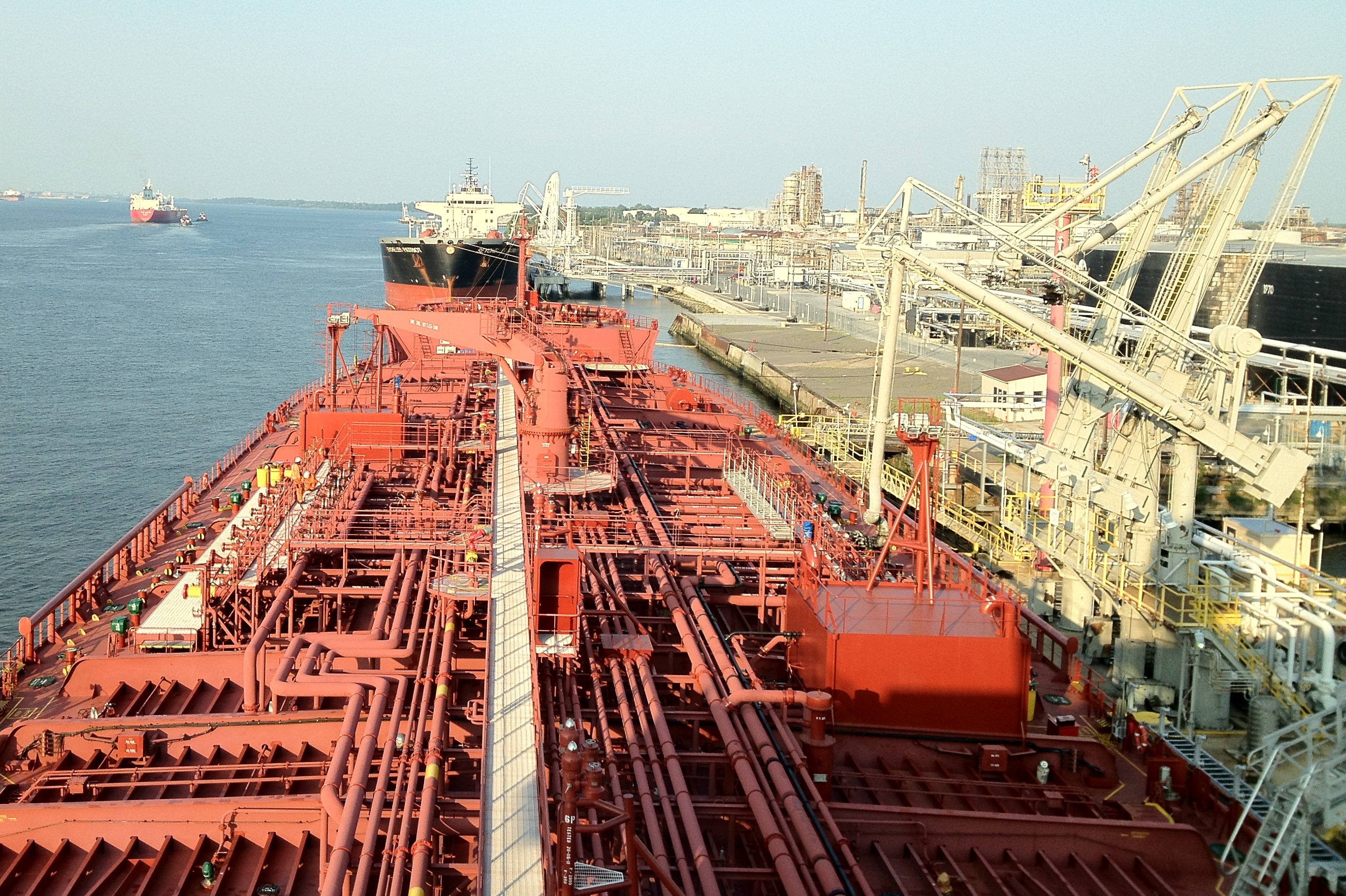
Good planning is the hallmark of efficient tanker operations. Before a tanker approaches port, there are several factors that must be considered:Testing of cargo/ballast valves, sea valves, pipelines, pumps, inert gas systems, emergency stops. Preparedness of fire-fighting, life-saving and anti-pollution equipment. A pollution drill held before a ship arrives in port will serve the purpose of checking ail equipment. Any response during an emergency will be good since a drill had been executed recently. Preparation of tanks, including readiness of slop tanks. Planning for proper … [Read more...]

By Capt. Angad S Cheema Filed Under: Tankers Tagged With: loading, odme, oil tanker, port operation, pumproom, pv valve, sbt, tankers, venting

mariner-gps
Sail Time
Simple Colregs COS Ad

Join Our List

Subscribe to our mailing list and get interesting stuff and updates to your email inbox.

Powered with ♥ by Cult of Sea

instagram-button

What others are reading

vts

Vessel Traffic Service (VTS) – Purpose, Organisation and its components

Annex

ANNEX IV – Distress Signals

Death On board – Master Responsibility as per MSA 1958

knots

Types of Knots, Bends and Hitches used at sea

Unseaworthy and Unsafe Ship’s as per MSA 1958

Circumpolar bodies

LRIT

Long Range Identification and Tracking ( LRIT )

The Inclining Experiment

The Inclining Experiment – Ascertain the GM of Vessel

The provisions of MERCHANT SHIPPING ACT 1958 regarding Certificate of Registry

stowaways

Stowaways – Who are they, What are Individual Duties?

TRS Cloud Structure

TRS or a Tropical Revolving Storm

Stresses in Ships

Part D - Sound and Light Signals

Rule 34 – Manoeuvring and warning signals

Passage Planning

Passage Planning in or near ice limit

Gyro Compass Basics

Gyro Compass – Basic Principle, Operation and Usage on Ships


About Us | Terms | Contact Us | Sitemap | Marine Glossary (BETA)

Cult of Sea®™ · Made with ❤ by a small band of sailors