
Cult of Sea

Maritime Knowledge base

  • Home
  • Knowledge base
    • Bridge Equipment
    • Cargo Work
    • Deck
    • General
    • Gmdss
    • Maritime Law
    • Marpol
    • MLC 2006
    • Meteorology
    • Navigation
    • Safety
    • Security
    • Ship Construction
    • Ship Handling
    • Ship Stability
    • Shippie’s Escape
    • Surveys
    • Tankers
  • Colreg’s (ROR)
    • Index (Colreg’s)
    • Part A- General
      • Rule 1 – Application
      • Rule 2 – Responsibility
      • Rule 3 – General Definitions
    • Part B- Steering and Sailing
      • Section 1 (Rule 4 -10)
        • Rule 4 – Application
        • Rule 5 – Lookout
        • Rule 6 – Safe Speed
        • Rule 7 – Risk of collision
        • Rule 8 – Action to avoid collision
        • Rule 9 – Narrow Channels
        • Rule 10 – Traffic separation schemes
      • Section 2 (Rule 11 – 18)
        • Rule 11 – Application
        • Rule 12 – Sailing vessels
        • Rule13 – Overtaking
        • Rule 14 – Head on situation
        • Rule 15 – Crossing situation
        • Rule 16 – Action by give-way vessel
        • Rule 17 – Action by stand-on vessel
        • Rule 18 – Responsibilities between vessels
      • Section 3 (Rule 19)
        • Rule 19 – Conduct of vessels in restricted visibility
    • Part C- Lights and Shapes
      • Rule 20 – Application
      • Rule 21- Definitions
      • Rule 22 – Visibility of lights
      • Rule 23 – Power-driven vessels underway
      • Rule 24 – Towing and pushing
      • Rule 25 – Sailing vessels underway and vessels under oars
      • Rule 26 – Fishing vessels
      • Rule 27 – Vessels N.U.C or R.A.M
      • Rule 28 – Vessels constrained by their draught
      • Rule 29 – Pilot vessels
      • Rule 30 – Anchored vessels and vessels aground
      • Rule 31 – Seaplanes
    • Part D- Sound and Light Signals
      • Rule 32 – Definitions
      • Rule 33 – Equipment for sound signals
      • Rule 34 – Manoeuvring and warning signals
      • Rule 35 – Sound signals in restricted visibility
      • Rule 36 : Signals to attract attention
      • Rule 37 – Distress signals
    • Part E- Exemptions (Rule 38)
      • Rule 38 – Exemptions
    • Part F – Verification of compliance with the provisions of the Convention
      • Rule 39 – Definitions
      • Rule 40 – Application
      • Rule 41 – Verification of compliance
    • Annexes
      • Annex 1 – Positioning and technical details of lights and shapes
      • ANNEX II – Additional Signals for Fishing Vessels Fishing in Close Proximity
      • ANNEX III – Technical Details of Sound Signal Appliances
      • ANNEX IV – Distress Signals
  • Glossary
  • Contact

Propeller Cavitation Explained – Cause, Types, Effects & Avoidance

Propeller Cavitation

Cavitation of a ship's propeller is phenomena that can greatly reduce a ship propelling efficiency whilst at the same time lead to rapid degradation of the propellor.To learn further about cavitation, we need to get familiar or refresh our knowledge regarding Liquid vapour phases.Solid (ice) Liquid (water) Vapour (steam)The phases of liquid and vapour are influenced by temperature and pressure. Water is normally observed to change its state to the form of vapour when its temperature is raised to above 100 deg C at atmospheric pressure. Water can also vaporise when the … [Read more...]

By Capt. Angad S Cheema Filed Under: Ship Construction Tagged With: boss, bubble, cavitation, erosion, laminar, noise, pressure, propeller, Sheet, vibration, vortex

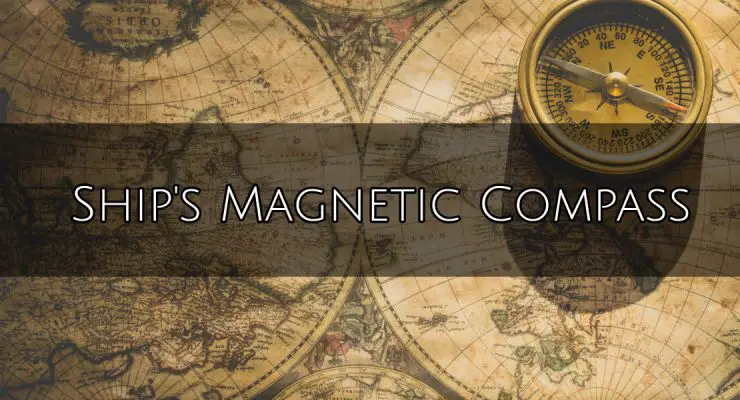
Ship’s Magnetic Compass – Dry and Wet Compass with their care, maintenance and bubble removal
Ship's magnetic compass

As per Chapter V of SOLAS 74, as amended, a magnetic compass is a compulsory part of the shipborne navigational equipment. This is in addition to the gyro compass & suitably placed repeaters on the ship. This is so primarily because of the reliable dependence one can place on the magnetic compass, as a standby compass in the event of failure of electrical power on board. The regulation also stipulates that the magnetic compass should be properly adjusted and a table or curve of deviations is available on board at all times.Our intention is only to give you a brief description and … [Read more...]

By Capt. Angad S Cheema Filed Under: Bridge Equipment Tagged With: binnacle, bubble, compass card, dry compass, magnetic, magnetic compass, wet compass

mariner-gps
Sail Time
Simple Colregs COS Ad

Join Our List

Subscribe to our mailing list and get interesting stuff and updates to your email inbox.

Powered with ♥ by Cult of Sea

instagram-button

What others are reading

ship-speed

Slow Speed Control

Minimum Age MLC 2006

Minimum age – MLC 2006

cgc_hollyhock_man_overboard_drill

Man Overboard – Manoeuvers you need to know to save a life

Ship Anchor

Anchor Terminology used in Shipping

Passage Planning

Passage Planning

Medical certificate – MLC 2006

Marine Insurance

Marine Insurance – Purpose, Principle, Warranties and General Average

Cold Work

Repatriation – MLC 2006

policy

What is a Marine Policy? Basics you need to know!

Part B - Section 2

Rule 12 – Sailing vessels

Surface Preparation Standards

General Average York Antwerp Rules

What is General Average & the importance of York-Antwerp Rules ?

Visual Storm (Cyclone) Warning Signals for Indian Sea Ports

Unseaworthy and Unsafe Ship’s as per MSA 1958


About Us | Terms | Contact Us | Sitemap | Marine Glossary (BETA)

Cult of Sea®™ · Made with ❤ by a small band of sailors