Cult of Sea

Maritime Knowledge base

  • Home
  • Knowledge base
    • Bridge Equipment
    • Cargo Work
    • Deck
    • General
    • Gmdss
    • Maritime Law
    • Marpol
    • MLC 2006
    • Meteorology
    • Navigation
    • Safety
    • Security
    • Ship Construction
    • Ship Handling
    • Ship Stability
    • Shippie’s Escape
    • Surveys
    • Tankers
  • Colreg’s (ROR)
    • Index (Colreg’s)
    • Part A- General
      • Rule 1 – Application
      • Rule 2 – Responsibility
      • Rule 3 – General Definitions
    • Part B- Steering and Sailing
      • Section 1 (Rule 4 -10)
        • Rule 4 – Application
        • Rule 5 – Lookout
        • Rule 6 – Safe Speed
        • Rule 7 – Risk of collision
        • Rule 8 – Action to avoid collision
        • Rule 9 – Narrow Channels
        • Rule 10 – Traffic separation schemes
      • Section 2 (Rule 11 – 18)
        • Rule 11 – Application
        • Rule 12 – Sailing vessels
        • Rule13 – Overtaking
        • Rule 14 – Head on situation
        • Rule 15 – Crossing situation
        • Rule 16 – Action by give-way vessel
        • Rule 17 – Action by stand-on vessel
        • Rule 18 – Responsibilities between vessels
      • Section 3 (Rule 19)
        • Rule 19 – Conduct of vessels in restricted visibility
    • Part C- Lights and Shapes
      • Rule 20 – Application
      • Rule 21- Definitions
      • Rule 22 – Visibility of lights
      • Rule 23 – Power-driven vessels underway
      • Rule 24 – Towing and pushing
      • Rule 25 – Sailing vessels underway and vessels under oars
      • Rule 26 – Fishing vessels
      • Rule 27 – Vessels N.U.C or R.A.M
      • Rule 28 – Vessels constrained by their draught
      • Rule 29 – Pilot vessels
      • Rule 30 – Anchored vessels and vessels aground
      • Rule 31 – Seaplanes
    • Part D- Sound and Light Signals
      • Rule 32 – Definitions
      • Rule 33 – Equipment for sound signals
      • Rule 34 – Manoeuvring and warning signals
      • Rule 35 – Sound signals in restricted visibility
      • Rule 36 : Signals to attract attention
      • Rule 37 – Distress signals
    • Part E- Exemptions (Rule 38)
      • Rule 38 – Exemptions
    • Part F – Verification of compliance with the provisions of the Convention
      • Rule 39 – Definitions
      • Rule 40 – Application
      • Rule 41 – Verification of compliance
    • Annexes
      • Annex 1 – Positioning and technical details of lights and shapes
      • ANNEX II – Additional Signals for Fishing Vessels Fishing in Close Proximity
      • ANNEX III – Technical Details of Sound Signal Appliances
      • ANNEX IV – Distress Signals
  • Glossary
  • Contact

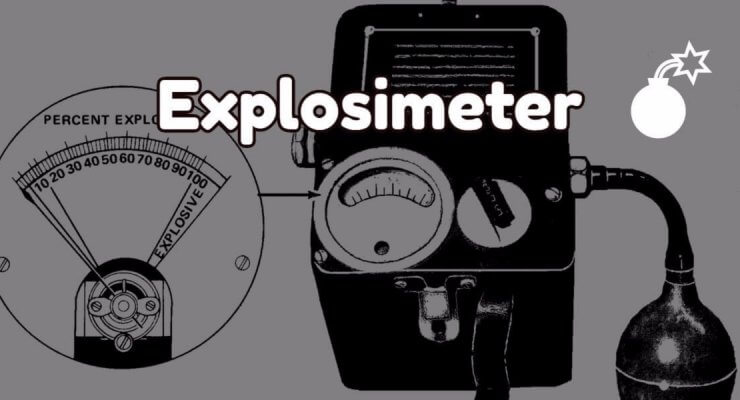
Combustible Gas Indicator or (Explosimeter) – Tanker Instruments

Principle The Combustible Gas Indicator (CGI) or Explosimeter is used to measure the volume of flammable gas in a gas/air mixture. It gives the result as a percentage of the lower flammable limit. It is used to ascertain the atmosphere in a cargo tank when planning tank cleaning in a too lean atmosphere or for evaluation of C/H gas prior to man entry, hot work or other operations.Marine Safety Appliances MSA 40 is a commonly used CCI. It works on the Catalytic Combustion Principle. A catalytic filament is heated by an electric current. A sample of the atmosphere to be tested is drawn over … [Read more...]

By Cult of Sea Filed Under: Tankers Tagged With: atmosphere, COMBUSTIBLE GAS INDICATOR, EXPLOSIMETER, gas, hc, instrument, tank cleaning, tankers

Molasses – Carriage on Tankers

GENERAL Molasses is the thick dark brown syrupy liquid left after sucrose has been removed from the mother liquid in sugar manufacture. There is two type of molasses – cane molasses and beet molasses. Blackstrap molasses is the syrup from which no more sugar can be obtained economically.Synonym of molasses  – Treacle.Main composition of molasses at 75 % Dry MatterCane molasses Beet molassesSucrose 30 – 40 % 48 – 52 %Reducing sugars 15 – 20 % 0.2 – 1.2 %Organic non-sugar matter 9 – 12 % 12 – 17 %Sulphated ash 3 – 11 % 3 – 10 % … [Read more...]

By Cult of Sea Filed Under: Tankers Tagged With: discharging, fermentation, harzards, loading, molasses, solubility, sucrose, sugar, tank cleaning, tankers, Treacle, viscosity

mariner-gps
Sail Time
Simple Colregs COS Ad

Join Our List

Subscribe to our mailing list and get interesting stuff and updates to your email inbox.

Powered with ♥ by Cult of Sea

instagram-button

What others are reading

Bill of Lading

Maritime – What is a Bill of Lading (B/L)?

Principles of Ship Handling

Unseaworthy and Unsafe Ship’s as per MSA 1958

Rising and Setting of Celestial Bodies

Gyro Compass Basics

Gyro Compass – Basic Principle, Operation and Usage on Ships

Solar System

Solar system and Kepler’s law of Planetary Motion

Employment Agreement

Seafarers employment agreements – MLC 2006

General Offence Against Discipline – Merchant Shipping Act 1958

Part D - Sound and Light Signals

Rule 36 : Signals to attract attention

Part E - Exemptions

Rule 38 – Exemptions

alarp risk

What is ALARP and why do you need to know it?

Note of Protest vs Letter of Protest

Note of Protest vs Letter of Protest – Why, When and Differences between NOP & LOP

Part B - Section 1

Rule 5 – Lookout

Formal Safety Assessment Cover

Formal Safety Assessment (FSA) – Guidelines for use in IMO Rule Making Process

IALA Buoyage System


About Us | Terms | Contact Us | Sitemap | Marine Glossary (BETA)

Cult of Sea®™ · Made with ❤ by a small band of sailors