Cult of Sea

Maritime Knowledge base

  • Home
  • Knowledge base
    • Bridge Equipment
    • Cargo Work
    • Deck
    • General
    • Gmdss
    • Maritime Law
    • Marpol
    • MLC 2006
    • Meteorology
    • Navigation
    • Safety
    • Security
    • Ship Construction
    • Ship Handling
    • Ship Stability
    • Shippie’s Escape
    • Surveys
    • Tankers
  • Colreg’s (ROR)
    • Index (Colreg’s)
    • Part A- General
      • Rule 1 – Application
      • Rule 2 – Responsibility
      • Rule 3 – General Definitions
    • Part B- Steering and Sailing
      • Section 1 (Rule 4 -10)
        • Rule 4 – Application
        • Rule 5 – Lookout
        • Rule 6 – Safe Speed
        • Rule 7 – Risk of collision
        • Rule 8 – Action to avoid collision
        • Rule 9 – Narrow Channels
        • Rule 10 – Traffic separation schemes
      • Section 2 (Rule 11 – 18)
        • Rule 11 – Application
        • Rule 12 – Sailing vessels
        • Rule13 – Overtaking
        • Rule 14 – Head on situation
        • Rule 15 – Crossing situation
        • Rule 16 – Action by give-way vessel
        • Rule 17 – Action by stand-on vessel
        • Rule 18 – Responsibilities between vessels
      • Section 3 (Rule 19)
        • Rule 19 – Conduct of vessels in restricted visibility
    • Part C- Lights and Shapes
      • Rule 20 – Application
      • Rule 21- Definitions
      • Rule 22 – Visibility of lights
      • Rule 23 – Power-driven vessels underway
      • Rule 24 – Towing and pushing
      • Rule 25 – Sailing vessels underway and vessels under oars
      • Rule 26 – Fishing vessels
      • Rule 27 – Vessels N.U.C or R.A.M
      • Rule 28 – Vessels constrained by their draught
      • Rule 29 – Pilot vessels
      • Rule 30 – Anchored vessels and vessels aground
      • Rule 31 – Seaplanes
    • Part D- Sound and Light Signals
      • Rule 32 – Definitions
      • Rule 33 – Equipment for sound signals
      • Rule 34 – Manoeuvring and warning signals
      • Rule 35 – Sound signals in restricted visibility
      • Rule 36 : Signals to attract attention
      • Rule 37 – Distress signals
    • Part E- Exemptions (Rule 38)
      • Rule 38 – Exemptions
    • Part F – Verification of compliance with the provisions of the Convention
      • Rule 39 – Definitions
      • Rule 40 – Application
      • Rule 41 – Verification of compliance
    • Annexes
      • Annex 1 – Positioning and technical details of lights and shapes
      • ANNEX II – Additional Signals for Fishing Vessels Fishing in Close Proximity
      • ANNEX III – Technical Details of Sound Signal Appliances
      • ANNEX IV – Distress Signals
  • Glossary
  • Contact

Static Electricity / Electrostatic Hazards

Static electricity is an imbalance of electric charges within or on the surface of a material. The charge remains until it is able to move away by means of an electric current or electrical discharge. Static electricity is electricity that does not flow in a current. Static electricity generated by rubbing two nonmagnetic objects together. The friction between the two objects generates attraction because the substance with an excess of electrons transfers them to the positively-charged substance. Usually, substances that don't conduct current electricity (insulators) are good at holding a … [Read more...]

By Capt. Angad S Cheema Filed Under: Tankers Tagged With: charge, charge accumulation, Charge Separation, electrostatic, Electrostatic Discharges, static, tankers

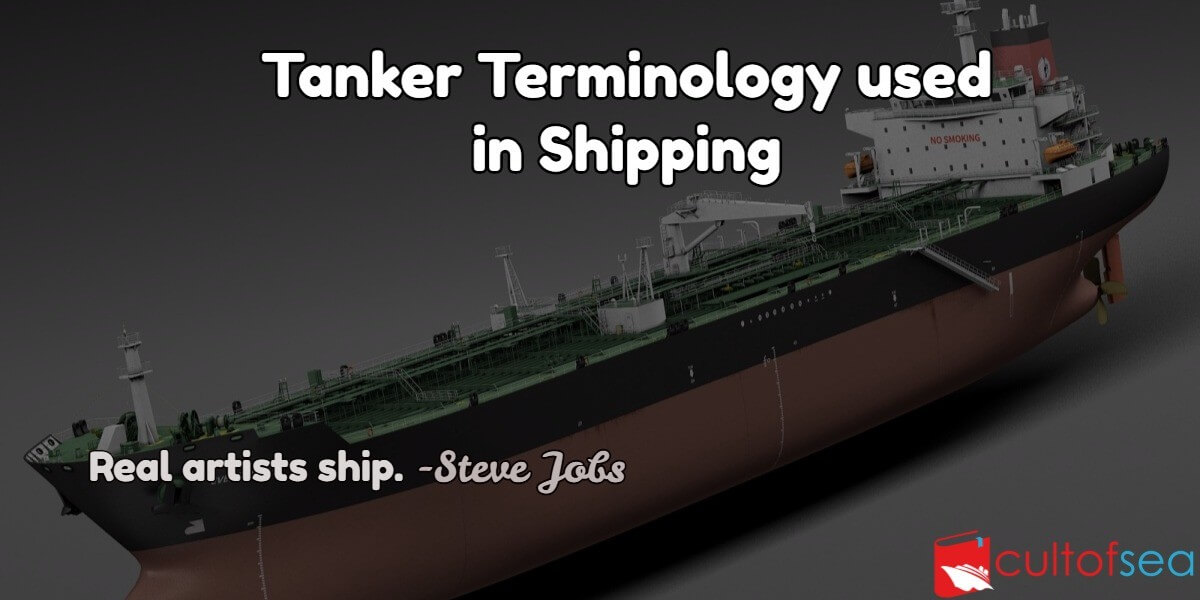
Tanker Terminology used in Shipping

Tanker Terminology  Anti-static additiveA substance added to a petroleum product to raise its electrical conductivity to a safe level above 50 picoSiemens/metre (pS/m) to prevent accumulation of static electricity. Auto-ignitionThe ignition of a combustible material without initiation by a spark or flame, when the material has been raised to a temperature at which self-sustaining combustion occurs. BondingThe connecting together of metal parts to ensure electrical continuity. Brush dischargeA brush discharge is a diffuse discharge from a single blunt … [Read more...]

By Capt. Angad S Cheema Filed Under: Tankers Tagged With: detector, flame, flashpoint, gas, gasfree, hazard, hydrocargon, inert, isgott, loading, pellister, petroleum, phase, purging, relaxation, static, stel, strip, tanker, tlv, tvp, vapour

mariner-gps
Sail Time
Simple Colregs COS Ad

Join Our List

Subscribe to our mailing list and get interesting stuff and updates to your email inbox.

Powered with ♥ by Cult of Sea

instagram-button

What others are reading

Circumpolar bodies

Logbook

Official log book entries as per MSA 1958

Ship’s Routeing – Organize and Improve Shipping Movement

Regulation 15

Control of operational discharge of oil (Machinery Spaces)

ssas

Ship security alert system (SSAS)

Passage Planning

Passage Planning

Port State Control

Port State Control (PSC) – An agreed regime for the inspection of foreign ships

Formal Safety Assessment Cover

Formal Safety Assessment (FSA) – Guidelines for use in IMO Rule Making Process

Part C Lights and Shapes

Rule 24 – Towing and pushing

Piping Arrangement – Conventional Oil Tanker Basics

Aneroid Barometer Featured

The Aneroid Barometer and How to use it…

International Institutions and their Association with Shipping (ILO, WHO, ISF, ICS, BIMCO, SIGTTO, OCIMF)

Rule 19 – Conduct of vessels in restricted visibility

Immersion Suit

Refrigeration Principle, Cargo and Systems


About Us | Terms | Contact Us | Sitemap | Marine Glossary (BETA)

Cult of Sea®™ · Made with ❤ by a small band of sailors