Cult of Sea

Maritime Knowledge base

  • Home
  • Knowledge base
    • Bridge Equipment
    • Cargo Work
    • Deck
    • General
    • Gmdss
    • Maritime Law
    • Marpol
    • MLC 2006
    • Meteorology
    • Navigation
    • Safety
    • Security
    • Ship Construction
    • Ship Handling
    • Ship Stability
    • Shippie’s Escape
    • Surveys
    • Tankers
  • Colreg’s (ROR)
    • Index (Colreg’s)
    • Part A- General
      • Rule 1 – Application
      • Rule 2 – Responsibility
      • Rule 3 – General Definitions
    • Part B- Steering and Sailing
      • Section 1 (Rule 4 -10)
        • Rule 4 – Application
        • Rule 5 – Lookout
        • Rule 6 – Safe Speed
        • Rule 7 – Risk of collision
        • Rule 8 – Action to avoid collision
        • Rule 9 – Narrow Channels
        • Rule 10 – Traffic separation schemes
      • Section 2 (Rule 11 – 18)
        • Rule 11 – Application
        • Rule 12 – Sailing vessels
        • Rule13 – Overtaking
        • Rule 14 – Head on situation
        • Rule 15 – Crossing situation
        • Rule 16 – Action by give-way vessel
        • Rule 17 – Action by stand-on vessel
        • Rule 18 – Responsibilities between vessels
      • Section 3 (Rule 19)
        • Rule 19 – Conduct of vessels in restricted visibility
    • Part C- Lights and Shapes
      • Rule 20 – Application
      • Rule 21- Definitions
      • Rule 22 – Visibility of lights
      • Rule 23 – Power-driven vessels underway
      • Rule 24 – Towing and pushing
      • Rule 25 – Sailing vessels underway and vessels under oars
      • Rule 26 – Fishing vessels
      • Rule 27 – Vessels N.U.C or R.A.M
      • Rule 28 – Vessels constrained by their draught
      • Rule 29 – Pilot vessels
      • Rule 30 – Anchored vessels and vessels aground
      • Rule 31 – Seaplanes
    • Part D- Sound and Light Signals
      • Rule 32 – Definitions
      • Rule 33 – Equipment for sound signals
      • Rule 34 – Manoeuvring and warning signals
      • Rule 35 – Sound signals in restricted visibility
      • Rule 36 : Signals to attract attention
      • Rule 37 – Distress signals
    • Part E- Exemptions (Rule 38)
      • Rule 38 – Exemptions
    • Part F – Verification of compliance with the provisions of the Convention
      • Rule 39 – Definitions
      • Rule 40 – Application
      • Rule 41 – Verification of compliance
    • Annexes
      • Annex 1 – Positioning and technical details of lights and shapes
      • ANNEX II – Additional Signals for Fishing Vessels Fishing in Close Proximity
      • ANNEX III – Technical Details of Sound Signal Appliances
      • ANNEX IV – Distress Signals
  • Glossary
  • Contact

Deck Cargoes

Deck Cargoes

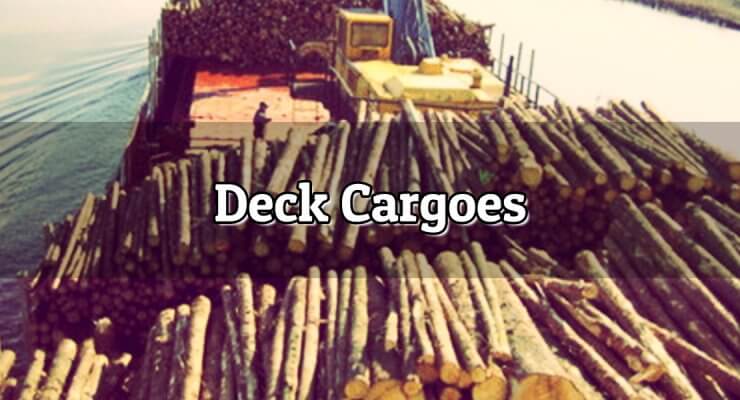
The phrase ‘deck cargoes’ refers to items and/or commodities carried on the weather deck and/or hatch covers of a ship and thereon exposed to sun, wind, rain, snow, ice and sea, so that the packaging must be fully resistant to, or the commodities themselves not be denatured by such exposure.Deck cargoes, because of their very location and the means by which they are secured, will be subjected to velocity and acceleration stresses greater, in most instances, than cargo stowed below decks.The stowage, lashing and securing of cargoes, therefore, require special attention as to method and … [Read more...]

By Capt. Angad S Cheema Filed Under: Cargo Work Tagged With: cargo manual, Cargo Work, container, csm, css, deck, deck cargo, girders, heavy lift, iron, livestock, steel pipe, timber, vehicles

Types of Knots, Bends and Hitches used at sea
knots

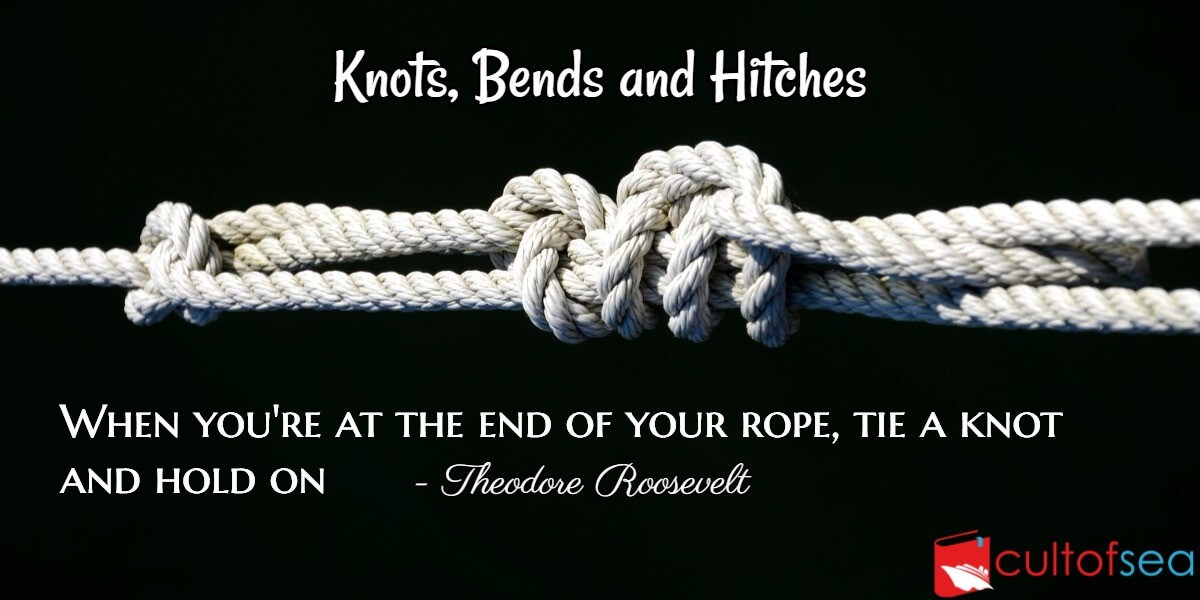
Knots, bends and hitches 1. Overhand knot: It is used for temporary whipping and preventing the rope unreeving from the block and provides the foothold for the life line. 2. Figure of 8 knot: Provide foothold on the lifeline of the lifeboat davit and with the keel grab line and prevent the rope from unreeving patent log with the log line. 3. Reef knot: It is used to the reef point which is used for shortening the sail.it is also used to tie a bundle with the single rope. The reef knot is also used to join two ropes of equal size. 4. Sheep … [Read more...]

By Capt. Angad S Cheema Filed Under: Deck Tagged With: bends, bight, blackwall, bowline, carrick, cat paw, clove, deck, figure of 8, fisherman, half, hitch, hitches, knots, overhand, reef, rolling, sheep, sheep shank, stage, timber

mariner-gps
Sail Time
Simple Colregs COS Ad

Join Our List

Subscribe to our mailing list and get interesting stuff and updates to your email inbox.

Powered with ♥ by Cult of Sea

instagram-button

What others are reading

OIL TANKER OPERATIONS (Discharging) – Conventional Tanker Basics

alarp risk

What is ALARP and why do you need to know it?

Magnetic Compass and Ships Magnetism

Magnetic Compass & Ship Magnetism – Simplified Explanation

EPIRB

EPIRB – Emergency Position indicating Radio Beacon

Safety Officer Onboard

Safety Officer Onboard – Definition, Duties and Powers

Annex

ANNEX III – Technical Details of Sound Signal Appliances

Master Pilot Exchange – Duties, Responsibilities and Elements of effective Relationship

Blu code

BLU Code – Code Of Practice For The Safe Loading And Unloading Of Bulk Carriers

Part B - Section 1

Rule 5 – Lookout

Hatch Covers

Hatch Cover and Access Lids

Gmdss radio watch

GMDSS Watches to maintain at sea

The Inclining Experiment

The Inclining Experiment – Ascertain the GM of Vessel

Inert gas

Inert Gas on board Tankers – All you need to know!

Agreement

Articles of Agreement – MSA 1958

Revised High Risk Area – BMP4 effective 1 December 2015


About Us | Terms | Contact Us | Sitemap | Marine Glossary (BETA)

Cult of Sea®™ · Made with ❤ by a small band of sailors